
A professional dog grooming academy trains students to recognize and manage breed-specific coat types, using specialized tools tailored for double, curly, or silky coats. Techniques focus on adapting to diverse dog temperaments with gentle dog grooming course, firm, or calm handling as needed. Health considerations like skin sensitivities and coat maintenance are emphasized. Training includes hands-on experience with various breeds to build practical skills and problem-solving. Exploring further reveals deeper approaches to mastering breed-specific grooming challenges.

Understanding Breed-Specific Coat Types
Although all dogs require regular grooming, understanding breed-specific coat types is vital for effective care.
Professional grooming academies emphasize recognizing distinctions such as double coats, single coats, curly, wiry, or silky textures cosmos pet universe. Each type demands specific tools and schedules to maintain health and appearance without compromising the dog’s comfort or natural protection.
For instance, double-coated breeds need careful deshedding to avoid damaging the insulating undercoat, while curly-coated dogs require regular trimming to prevent matting.
Techniques for Handling Diverse Temperaments
When working with dogs of varying temperaments, groomers must adapt their approach to guarantee safety and comfort.
Professional academies train groomers to recognize behavioral cues and respond calmly, fostering trust. Techniques include using gentle restraint, allowing breaks, and employing positive reinforcement to ease anxiety.
For nervous or shy dogs, slow movements and quiet voices help create a relaxed environment. More energetic or reactive dogs may require firm but non-threatening handling to maintain control.
Understanding each dog’s unique personality guarantees the grooming process is smooth and stress-free. This adaptability not only protects the dog and groomer but also promotes a positive experience, encouraging repeat visits and enhancing the dog’s well-being over time.
Specialized Tools and Equipment for Various Breeds
Effective grooming requires specialized tools tailored to the distinct coat types and sizes of various dog breeds.
Professional grooming academies emphasize equipping trainees with breed-specific tools, such as slicker brushes for dense double coats, pin brushes for long, flowing fur, and stripping knives for wiry hair.
Clippers with adjustable blades accommodate size differences and coat textures, ensuring precision without discomfort.
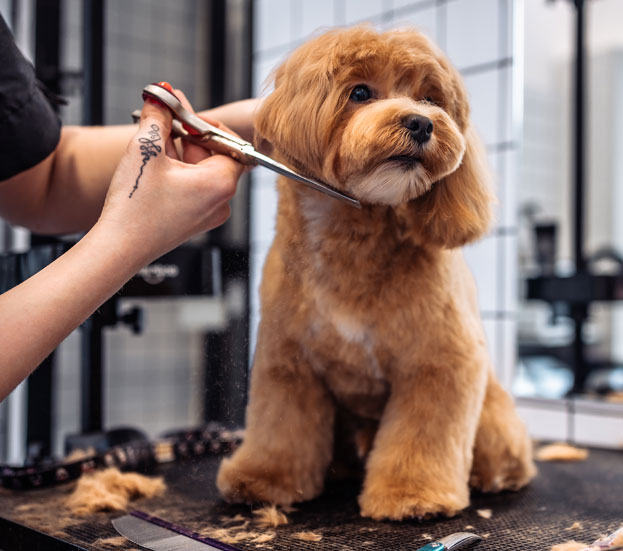
Groomers also learn to select appropriate scissors for trimming and shaping, with curved or straight blades depending on the breed’s style.
Baths and dryers are chosen to suit coat thickness and drying needs.
Health and Skin Care Considerations by Breed
Because different dog breeds possess unique skin types and sensitivities, health and skin care must be tailored accordingly.
Professional grooming academies emphasize the importance of recognizing breed-specific conditions such as allergies, dryness, or oily skin. For example, breeds with dense undercoats require careful attention to prevent matting and skin irritation, while short-haired breeds might need gentle moisturizing to avoid dryness.
Additionally, some breeds are prone to hot spots or bacterial infections, necessitating regular inspection and appropriate topical treatments. Trainers also stress the selection of hypoallergenic or breed-appropriate grooming products to maintain skin balance without causing harm.
This targeted approach promotes healthier coats and skin, enhancing each dog’s comfort and well-being while respecting their natural differences.
Practical Training With Real Dogs of Different Breeds
Numerous benefits arise from hands-on grooming practice with dogs of various breeds, allowing trainees to apply theoretical knowledge in real-world settings.
Engaging directly with diverse breeds cultivates adaptability, enabling groomers to understand breed-specific coat textures, temperaments, and grooming needs. This experiential learning fosters confidence and skill refinement, essential for professional success.
Trainees encounter challenges unique to each breed, such as managing thick double coats or delicate skin, promoting problem-solving and technique adjustment.
Access to real dogs also enhances communication skills, as groomers learn to read canine body language and guarantee a calm, cooperative environment.
Ultimately, practical training empowers aspiring groomers with freedom to innovate and master their craft, preparing them to meet client demands across varied canine profiles effectively and efficiently.
Conclusion
A professional dog grooming academy emphasizes the importance of breed-specific knowledge, combining an understanding of diverse coat types, temperaments, and health needs. Through specialized tools and hands-on experience with various breeds, trainees develop tailored grooming skills. This thorough approach guarantees groomers are well-equipped to provide ideal care, enhancing both the appearance and well-being of each dog. Ultimately, such training fosters expertise essential for meeting the unique demands of different breeds.